⏰
Step 1
Reset the Feeding Routine
Create predictable meals and snacks, and review habits that may reduce appetite before mealtimes.
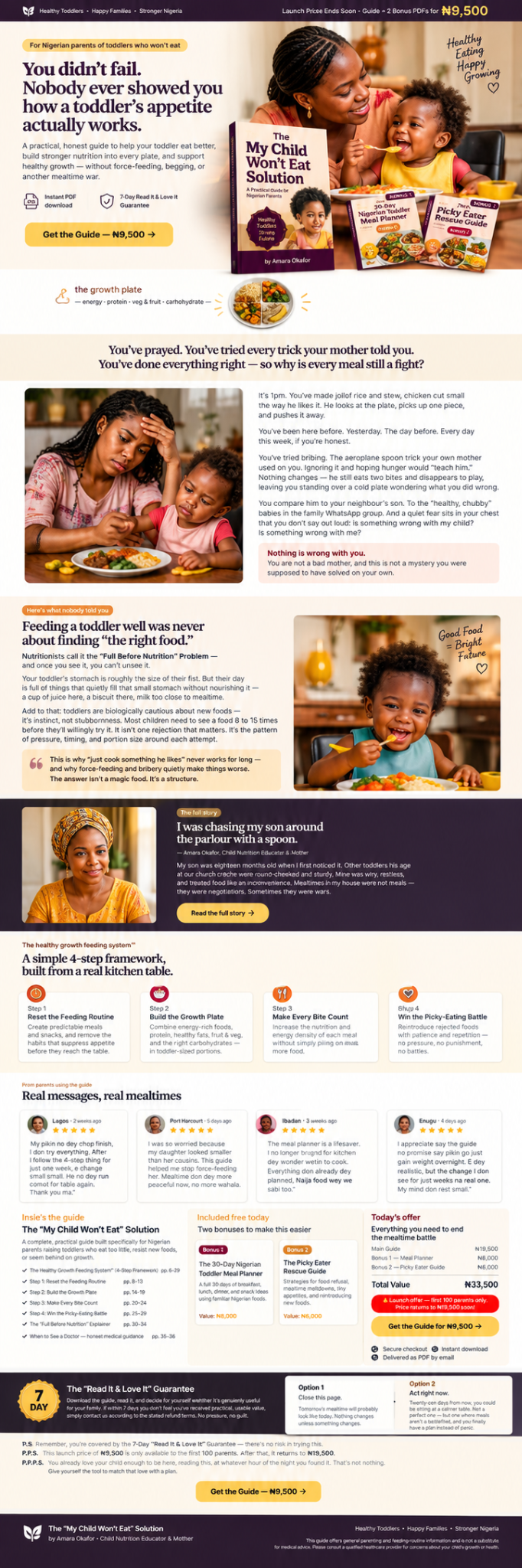
A practical, honest guide to help your toddler eat better, build stronger nutrition into every plate, and support healthy growth — without force-feeding, begging, or another mealtime war.
Energy · Protein · Vegetables & fruit · Carbohydrates
You’ve prayed. You’ve tried every trick your mother told you. You’ve done everything right — so why is every meal still a fight?
Mealtimes can feel difficult.
You are not alone.
It’s 1pm. You’ve made jollof rice and stew, chicken cut small the way he likes it. He looks at the plate, picks up one piece, and pushes it away.
You’ve been here before. Yesterday. The day before. Every day this week, if you’re honest.
You’ve tried bribing, the aeroplane spoon trick, or hoping hunger would “teach him.” He still eats two bites and disappears to play, leaving you wondering what you did wrong.
You compare him to other children and quietly wonder: is something wrong with my child? Is something wrong with me?
Here’s what nobody told you
A child may fill up on juice, biscuits or milk too close to mealtime, leaving less appetite for a nourishing meal. Toddlers can also be cautious about unfamiliar foods.
Repeated, low-pressure exposure can help children become more comfortable with foods over time. The pattern of pressure, timing and portion size matters.
Good food. Gentle routines.
Room to learn.
The full story
— Amara Okafor, Child Nutrition Educator & Mother
My son was eighteen months old when I first noticed how stressful mealtimes had become. Meals were negotiations — sometimes wars.
I tried rotating favourite foods, bribery, force-feeding, oversized portions and waiting for hunger to do the work. The pressure made meals harder for both of us.
The turning point was learning about feeding structure: meal timing, appetite windows, appropriate portions, and letting a child respond to their own hunger and fullness cues.
Explore the 4-step system →The Healthy Growth Feeding System™
Step 1
Create predictable meals and snacks, and review habits that may reduce appetite before mealtimes.
Step 2
Combine energy-rich foods, protein, healthy fats, fruit, vegetables and suitable carbohydrates in toddler-sized portions.
Step 3
Learn ways to increase the nutritional value of meals without simply piling on more food.
Step 4
Reintroduce rejected foods with patience and repetition — without pressure or punishment.
What changed, week by week
We set predictable meal and snack times and made a plan instead of reacting in panic.
He picked up his spoon without being asked, for the first time in months.
He tried a new food without a fight. Three real bites, unprompted.
Mealtimes felt calmer and became shorter on many days.
The family felt more confident about mealtime routines and what to try next.
Every child is different. This is an illustrative family experience, not a promise of a specific outcome. Seek professional advice about concerns regarding your child’s growth or health.
From parents using the guide
Replace these sample testimonial-style statements with verified customer reviews before publishing.
“My pikin no dey chop finish. The routine ideas helped us approach mealtimes more calmly.”
“I was worried about my daughter. This helped me think about reducing pressure and making mealtime more peaceful.”
“The meal planner gave me a place to start. I no longer have to wonder what Nigerian meals to plan.”
“I appreciate that it doesn’t promise overnight weight gain. It focuses on practical routines.”
Inside the guide
A practical guide for Nigerian parents whose toddlers eat very little, resist new foods, or have mealtime struggles.
Included free today
A month of breakfast, lunch, dinner and snack ideas using familiar Nigerian foods.
Listed value: ₦8,000
Ideas for food refusal, mealtime meltdowns, small appetites and introducing foods without pressure.
Listed value: ₦6,000
Main guide + meal planner + picky eater guide
Instant digital deliveryToday’s offer
Read the guide and decide whether it provides practical value for your family. If it does not, contact the seller within seven days and follow the refund terms provided at checkout. Publish this guarantee only if you can honour it.
Option 1
You may still be wondering what to try next or how to make meals feel less stressful.
Option 2
Get practical ideas for routines, balanced toddler-sized plates and low-pressure ways to introduce foods.
Get the Guide — ₦9,500 →P.S. The guide is designed to give you practical ideas, not to make you feel guilty about your child’s appetite.
P.P.S. The launch price is ₦9,500 for the guide and two bonus PDFs.
P.P.P.S. You already care enough to look for help. Give yourself a clear, practical starting point.
Common questions
No specific weight gain can be promised. The guide focuses on feeding routines, food variety and practical nutrition habits. Growth depends on each child’s health and development.
No. Please consult a qualified healthcare provider promptly about significant weight loss, poor growth, feeding difficulty or other health concerns. This guide is educational and is not a substitute for medical care.
It is intended as a digital PDF. Add your actual delivery process, such as email delivery or a download page, before publishing.
The seven-day guarantee should be honoured according to the refund terms shown at checkout. Make those terms and your contact details clear before accepting orders.